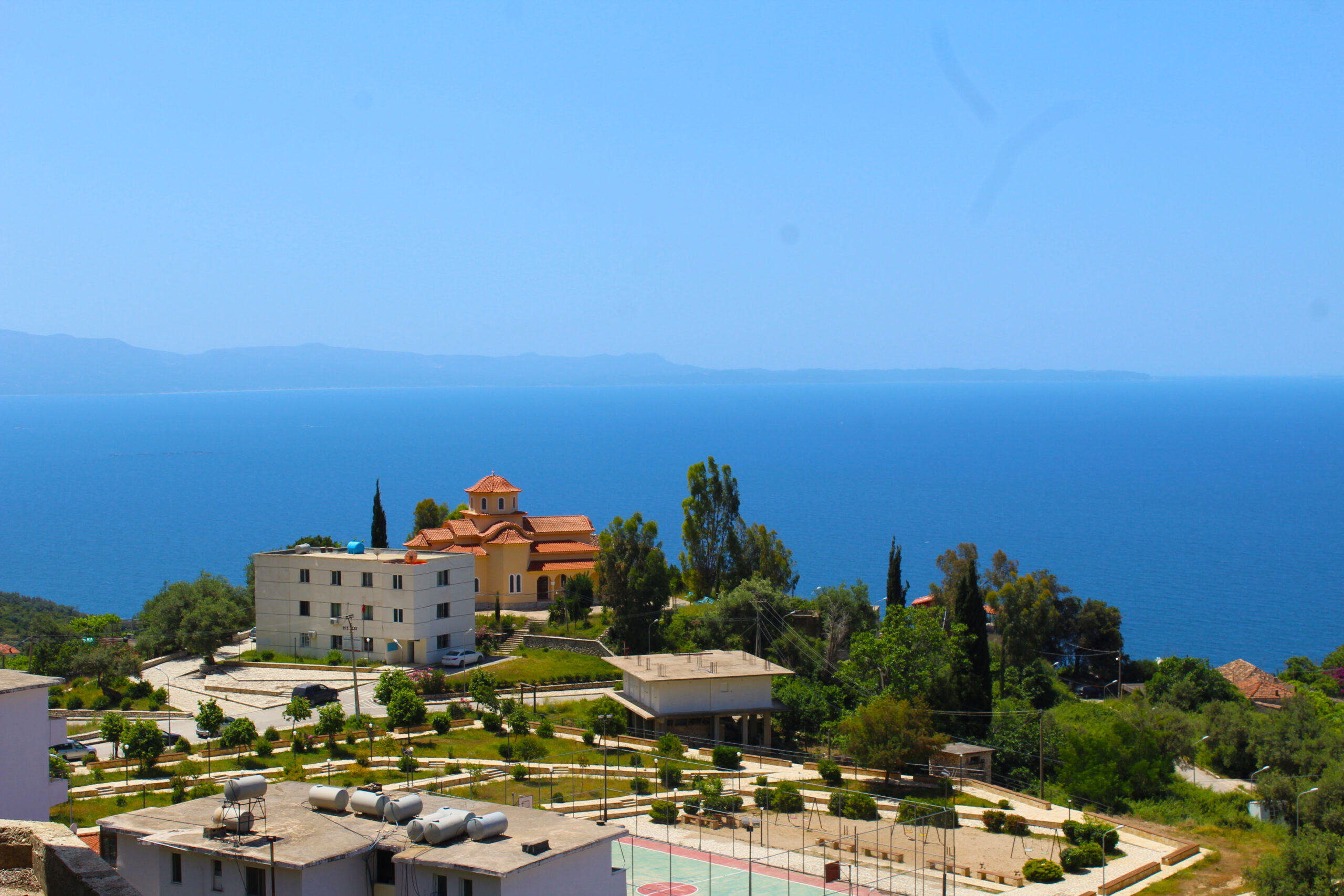
Lukova is a coastal village and the southernmost village in the province of Himara. It is located directly between the cities of Himara and Saranda, specifically 21 km from Saranda.
No more than 30 minutes by car from each of these cities, Lukova offers very favorable conditions in terms of proximity to urban centers, deep mountain areas and the sea.
Lukova lies on the Albanian Riviera and has about 3,000 inhabitants.
Due to its typical Mediterranean geographical position, Lukova has 300 sunny days a year, is washed by the Ionian Sea and is known for its virgin beaches.
The inhabitants of Lukova are called Lukovjots. The etymology of the name Lukovë originates from the Slavic "lukë", which means: green place, forest.
It is bordered by the villages of Sasaj and Piqeras, Hundëcovë, Saint Vasil and Nivicë.
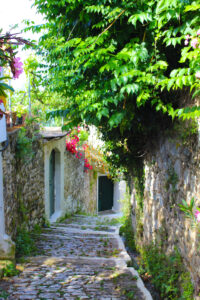
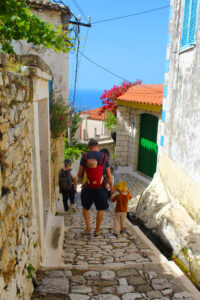
Its coastal waters offer tourists the possibility of a combined beach and village experience in one place. Its narrow streets preserve the character of the original medieval settlements, paved with cobblestones and surrounded on both sides by the walls of houses, called avlli.
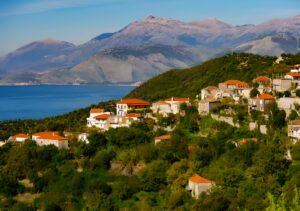
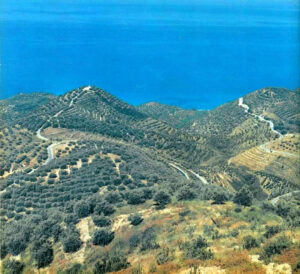
The village is located in the middle of citrus terraces in a landscape full of contrasts between the blue of the Ionian Sea and the green of the surrounding hills.
The French traveler François Pouqueville, at the beginning of the century. XIX compares this village with the "Garden of Eden".
In 1431, there is the first written evidence of Lukova in the Ottoman cadastre, the village had a total of 44 houses and resulted in the name "Liukova".
In 1852, Lukova had 340 inhabitants. In 1912 the village was burned by the Ottomans and referring to the censuses in 1913, Lukova had 410 inhabitants. In 1927, Lukova had 470 inhabitants. In 1991, the census counted the population at 2,076, but soon after, most of the population emigrated abroad. In 1918, a primary school was established with lessons in the Albanian language. At the time, this was quite rare for the region, as most of the schools that existed were run in Greek.
In 1983, the general secondary school was opened, which became the center of the spread of culture and knowledge in the area. In 1991, in the population census, Lukova was populated with residents from all over the country and being the center of the national youth action, it reached 2076 residents. Today, most of the population has emigrated to Greece, America, Canada, Italy, Germany, etc.
How to get to Lukova
Lukova is located in the south of Albania, between Himara and Saranda, no more than 30 minutes by car from both cities. The best way to reach Lukova from abroad is to first fly to Corfu and then take the ferry to Saranda. From Saranda it is 25 minutes by car to Lukova. You can also take any minibus (van) from Saranda that goes north towards Himara, Dhërmi or Vlora.
Or you can fly to Tirana and take the bus to Saranda, which takes the coastal road and drops off at the upper town of Lukova.
History
The settlement of Lukova probably dates back to the eleventh century, although the terrain appears to have been inhabited since ancient times. Its early location is the town of Dhokna in the hills of Gjashnjar which belongs to the century. III - II BC
The events are not confirmed, but local legend says that Dhokna was destroyed in antiquity, burned by the Roman legions of General Paulus Emilius, in 167-169 BC, along with seventy other cities in Epirus.
The inhabitants of Lukova have historically dealt with livestock and less with agriculture or fishing, despite the proximity to the sea. In the late Middle Ages, many of the inhabitants of Lukova migrated and worked as manual laborers in France and Italy. A large number of Albanian immigrants from Lukova acted as soldiers in the charge of the Kingdom of Naples, being distinguished for being especially skilled in shooting. In the almost continuous battles against the Ottoman invaders in the seventeenth century, Lukova, like many coastal villages, was a hotbed of resistance efforts.
Documents from the wards of the Kingdom of Naples, dating from the eighteenth century, record a battle in which thirty inhabitants of Lukova were killed.
The village was burned by the Ottomans in 1912, forcing the population to go into exile in Corfu for almost a year. The most famous resident of Lukova is the legendary figure Kalina. Kalina was a major force during the popular resistance of the seventeenth century, and the story of her life has been passed down through legends through the generations.
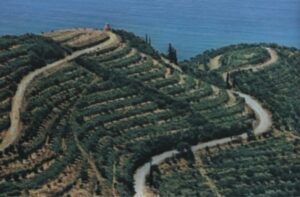
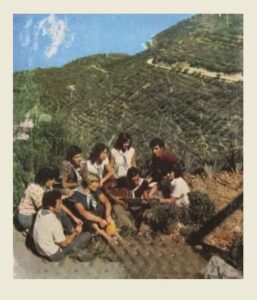
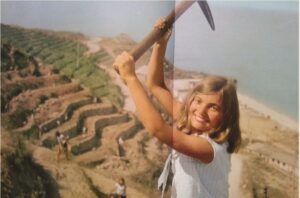
Photos of the terraces and work, taken from Ylli Polovina's book, "Communism as I saw it"
Terraces and shares
During the socialist system, when agriculture was one of the main economic sectors and the approach was "to rely on our own resources"; extensive efforts for the terracing of the hilly and mountainous terrain of Lukova started from 1966 onwards. The terraces make up the current cultural landscape of Lukova and the coast. In 1972, Lukova became the center of the Agricultural Enterprise on the Coast.
In the agricultural sector, Lukova was the "National Youth Action Center".
During the period of the agricultural cooperative 1957-1972, terraces, sewers and various facilities were built. All this wealth in 1972, returned to the State Farm.
From 1972 onwards, the rest of Lukova's land was deforested, which the village used for pasture and development.
The tradition of the village in agriculture, built up over the centuries and the diverse fruit culture further expanded the state in the last 20 years of the communist system, where Lukova's gardens on the entire surface, pastures, hills, valleys turned into a model farm, known like "NB Lukova", where every hill was deforested and planted with citrus fruits, lemons, oranges, tangerines and olive trees by the villagers. There were 12 brigades with about 50 workers each and alongside them the voluntary work of 800-2,000 shareholders who came every month from all over Albania.
The horn of the ships at sea signaled the commercial port of Bunec, which served for the export of thousands of tons of citrus fruits and olives mainly to Northern Europe, the time of the production harvest, while a sound center in the center of the village blared and woke up the working class.
The old village
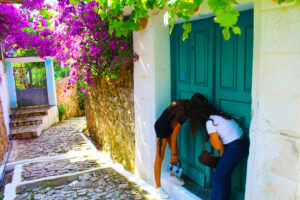
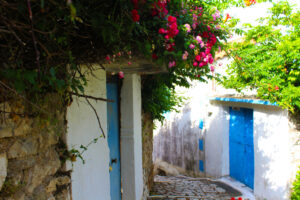
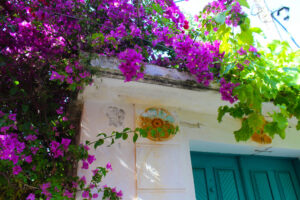
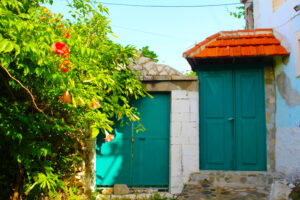
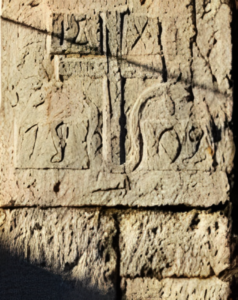
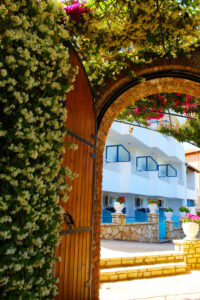
The old village of Lukova is typical Mediterranean style and is the place where the earliest inhabitants of Lukova live. With narrow and cobbled streets, characteristic old houses with colorful doors and covered with several types of flowers, this village seems to transport you to a fairy tale. The intoxicating aromas of flowers are accompanied by the chirping of swallows, flying peacefully over Lukova. In almost every alley you see water channels left and right on the road. Cars cannot enter there. In old houses can be seenthe gates of the courtyards with the stone arches, while the writings and figures carved in them show the cultural heritage they carry over the years. Over 20 films and 10 video clips were shot there.
Architecture
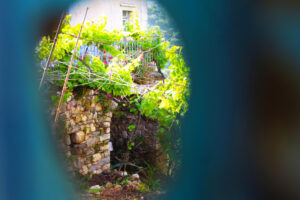
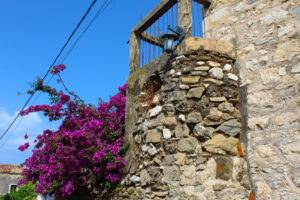
The houses of Lukova are built with local stones. Almost every house has orchards and vineyards. The old houses in Lukova have preserved cisterns in the ground, which were once supplied by rainwater. These cisterns on the ground floors have historically served as a place where food could also be stored, due to the stable and cooler temperatures. Small man-made and animal paths criss-cross the hill on which the village is built, leading from the main road through the agricultural terraces to the seashore. The village lies on two hills covered with olive and orange plantations at an altitude of 150 meters above sea level.
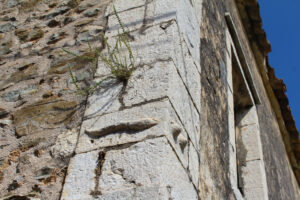
The core of this village stands out for the high integrity of the preservation of the traditional building architecture, with two to three-story dwellings, as well as their vaulted gates and corners carved with traditional symbols of the popular superstition of the area.
Folklore
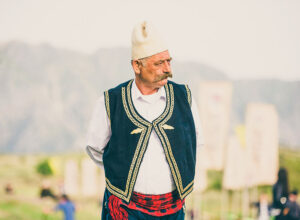
Until the beginning of the twentieth century, men in Lukova wore a fustanella - a fabric sewn by weaving on a loom, using wool or fine linen threads. The dress was sewn in white, pants that stopped just below the knee. Below, the men wore a white tirza, or long trousers, tied with braids and tassels. On top, the men wore a black and white waistcoat and a traditional red hat with a yellow tassel. Their attire was accompanied by traditional leather moccasin shoes, mostly red with black fringe on top. Under the waistcoat, the man wore shirts with wide sleeves, made of white cambric or imported cloth. In the middle, where the waistcoat joined, a long belt was wrapped, made of linen thread, mostly red and rarely brown. This belt was about two and a half meters long and as wide as the palm of the hand.
Traditional women's clothing is known as the veshta—a wrap-around garment, the bottom of which is decorated with a richly colored crocheted ribbon. Instead of a vest, older women wore a long, wide, dark-colored piece. In Labëri, the dress would be accompanied by a knitted sweater.
The colors corresponded to the age of the woman (red for young girls, darkened with age). The "Song of Lukova", similar to many other villages in the south, is the harmonized polyphony of different voices in a single melodic line. In addition, wedding and funeral songs are of interest to researchers due to the presence of pagan elements in them.
Places of worship
There is evidence that a saint of the Orthodox Christian Church, Oshenar Nifoni, was born in Lukovo sometime during the thirteenth century. He first worked as a priest in a monastery in Mesopotamia, and later reached the highest rank of Ecumenical Patriarch in Constantinople in 1310, and was canonized after his death.
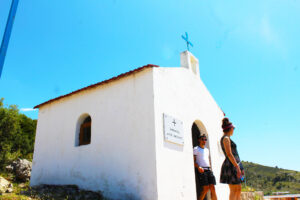
The Church of Saint Kolli, named after Saint Nifoni, is located on the way to the national road, it is a small church, easily accessible by tourists.
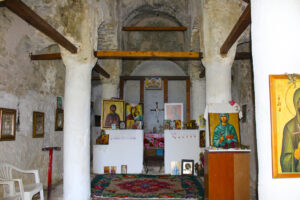
A few meters away from the center of the village is Saint Friday Church, Cultural Monument of the first category (I).
The church dates back to 1600 and is located on a hill overlooking the Ionian Sea.
Once the Saint Friday church had a bell, which was donated by the king of Naples in 1695, but it disappeared in 1967, during the massive destruction of churches and mosques that took place under Enver Hoxha's regime.
The Church of Saint Thanasi is located in the village of Lukovë, 22 m from the sports field and 223 m from the national road. Athanasius I of Alexandria (296-292 – 2 May 373), also called Athanasius the Great, was a "father" of the Greek church and the 20th Pope of Alexandria. His episcopate lasted 45 years. He was a Christian theologian, church founder, defender of Trinitarianism, and a leader of Christianity in the Aegean during the fourth century.

Beaches and bays
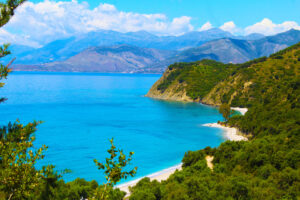
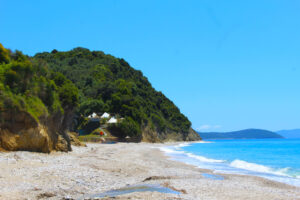
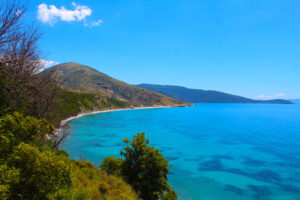
The village of Lukovë is not physically connected to the beach, but the sea is not far away. Lukova on its wide coast hosts a large number of beaches of different sizes, starting from small beaches with a very intimate atmosphere to popular beaches.
Once you are on the national road that passes through Lukova, you will find signs of the beach: "Cave Beach" of Lukova and "Buneci Beach" known by vacationers.
Lukovë Cave Beach is located 25 km from Saranda. The beach next to it is named after the Lukova cave.
The road to "Cave Beach" follows the hills below as a winding road between olive trees.
Bunec Beach lies between Borsh and Lukova, located on both sides of the Lapardha stream.
It has the shape of an arch, with a coastline length of 2000 m, and on the two sides of the concrete runway, military ships were once anchored, while now fishing boats were anchored.
In Lukova you can can find several private beaches such as Matias Fish and La onda, the two most frequented beaches, Beach Bar and Restaurant.
You can rent beach beds and umbrellas if you want, but you can also lay out your beach towels by the sea to catch some rays and enjoy nature.
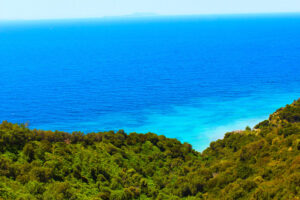
- Barkle Bay and other hidden bays of the coast offer breathtaking views of the virgin beaches in Lukovo, untouched by human hands. To see them, it is recommended to walk a few minutes.
- Lumra is located on the virgin coast of Lukova, where the mountain kisses the sea and the white pebbles. The road and paths through the olive groves lead to hidden naturalist coves down on the coast. Some of the most popular campsites are located in this area.
- Mrostari includes the old citrus road in the time of the generations before the 90s, the paths and the road that leads to the "Cave Beach".
“Bazaar Neck”
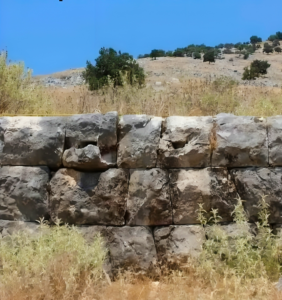
Traces of an old castle believed to be from the 3rd-2nd century BC have also been found in the place that the villagers call "Bazaar Neck".
There are the remains of the epic city of Dhokna, a construction dating back 2000 years ago by the Kaon tribe population. Qafa e Pazar has served as a commercial center between Himara, Corfu, Delvina and Gjirokastra. Currently, only a few ancient walls can be seen. Other small remains of the ancient city can be seen scattered among the hills of Lukova.
There are also ancient tombs c. V-IV BC "Varret e Jelimëve", 2.5 km from the center of the village on the road to "Cave Beach", in the place called "Kala".
If you walk the streets of the village you can discover the old aqueduct, which now serves as a spring from the mountain with cold water, and bunkers from the communist period.
Camping and 'Glumping'
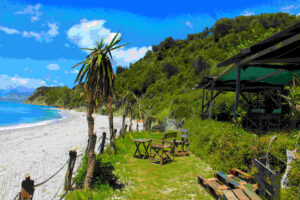
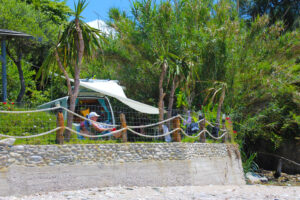
The tourists who fill the village in the summer months are naturalists. Campsites and tents spread among the many olive trees that blend in perfect harmony with the blue color of the Ionian Sea.
"Gate to Horizon", got its name because of the natural beauty that surrounds it. Sunsets and a wonderful view of the horizon gave this place its name.
"Llaka e Bredhanit" is the name of the area below the beach, part of the village of Lukovë where the campsite is located, on the shore of Lumra. It is a plantation with old olive trees and various citrus fruits that offers a lot of shade and freshness during hot summer days. It is a place for adventure vacations and nature lovers.
The campsite is considered a quiet place, surrounded by nature. There are also camping activities such as hiking, diving, windsurfing, etc.
Tourists pitch their own tent and can easily use the camping facilities. There is a grill to use for anyone who enjoys BBQ. Mostly foreign tourists take with them special vehicles, caravans or campers for camping.
In the camp you can find Bio products from the village as well as Bio olive oil from the olives and citrus fruits located there. The restaurant offers wonderful tastes of fresh Ionian sea products.
In addition to it, there are also several other campsites that are mainly frequented by foreigners.
Currently, a new glumping is being prepared, where the naturalist element will be combined with the modern one.
Hotels and businesses in the area
In Lukovë, there are hotels and guest rooms for all visitors who want to spend a few days in the pearl of the Albanian Riviera. Among them we are listing:
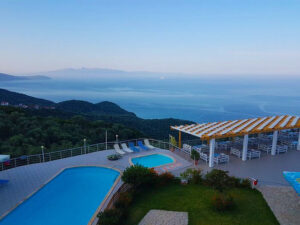
- Hotel Itaka. Among the greenery and with a stunning view of the sea, in addition to private rooms and villas with stone walls, it offers a terrace, a bar, restaurant, outdoor pool, free air conditioning and free private parking. With a very friendly environment where the traditional meets the modern, Hotel Itaka offers a perfect option for those who want a comfortable stay and facilities. The owner of this hotel, Mr. Odise Papa, says that "Greenery and the coast in Lukova are in complete harmony. The sunset is a premiere that appears every evening on the horizon", while he thinks that in recent years coastal tourism in the south of the country has changed the way of serving vacationers in a positive sense.
- Eduart Lagji apartments have stunning views of the sea or the garden full of greenery, citrus fruits and flowers. There is free WiFi and free private parking. It is located 2.5 km from Lukova beach. Each unit has a kitchenette, air conditioning, a flat-screen TV and a private bathroom with a hairdryer, a balcony and a wardrobe.
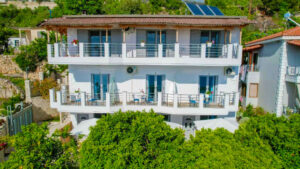
- Hotel Vila Kafe. Located in Lukovë, 2.8 km from Bunec Beach, Hotel Vila Kafe provides accommodation with a seasonal outdoor swimming pool, free private parking, a garden and a shared lounge. The hotel has a terrace and a bar. At the hotel, the rooms have a balcony. Each room is equipped with air conditioning and a flat-screen TV, and some units at Hotel Vila Kafe have a sea view.
In Lukova there are several restaurants that serve delicious Mediterranean food. Some places where you can eat high quality food are suggested: One of them is Perla restaurant at the entrance of the village, where the soup, salad and fish dishes of the lady of the house are wonderful.
Panorama Restaurant, in addition to quality food and drinks, offers a stunning view over the sea, just like its name.
For dough and pizza lovers, Lukova offers one of the most surprising pizzerias of the Albanian Riviera. Pizzeria Riviera Lukovë, a balcony over the sea, in a small corner of the main road that goes through the village, will surprise you.
This small pizzeria is full of foreign tourists in the evening, mainly German and Swiss, even though it is still early June.
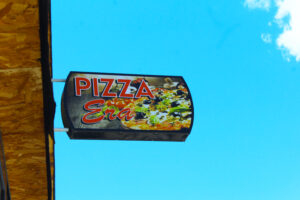
Another pizzeria along the main road in the village is called Pizzeria Era and offers delicious wood-fired pizzas. It also offers transportation to any beach or village area.
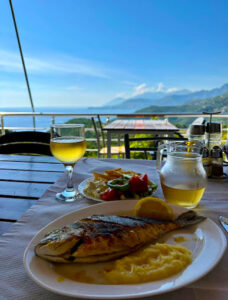
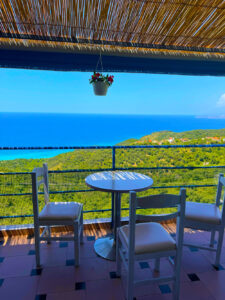
Lukova is a great place to relax and enjoy nature, you can also enjoy the beauty of the countryside with shops, cafes and restaurants. In addition to the beaches, the environment is also great for hiking or horse riding.
HAVE A NICE VISIT!